Dental Implants vs Dentures: Cost, Benefits, & Comfort
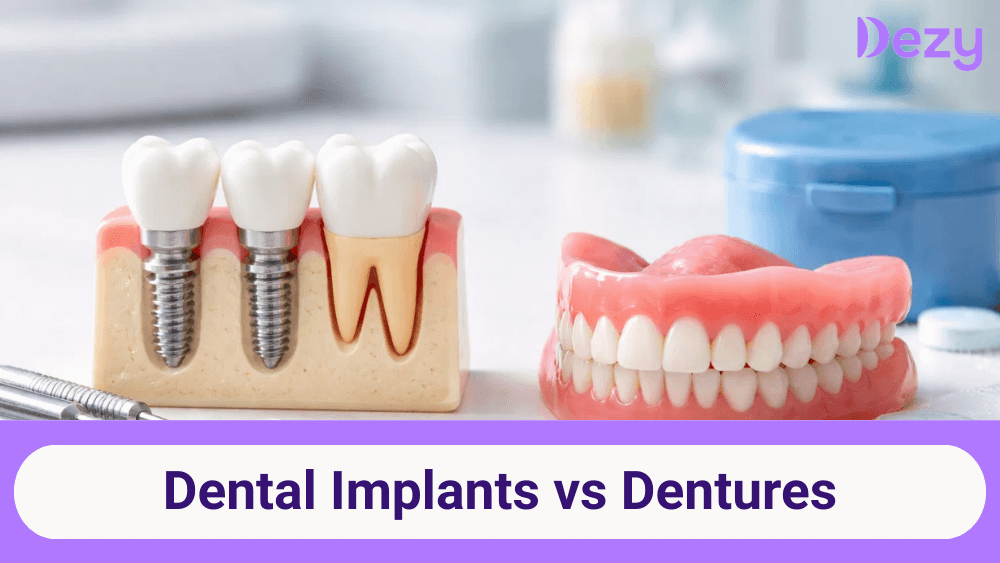
Missing teeth can affect chewing, speech, facial structure, and self-confidence. While several tooth replacement options exist, the debate around implants vs dentures remains the most common.
Both solutions restore function and appearance, but they work very differently and suit different needs. This guide explains the differences between these two dental treatment options, helping you make an informed decision.
Implants vs Dentures: Implants are permanent, fixed replacements that feel and work like natural teeth, offering strong bite, better stability, and long-term durability, but they cost more and require surgery. Dentures are removable, more affordable, and good for replacing multiple teeth, but they can feel less stable, need regular adjustments, and don’t prevent bone loss. The choice depends on budget, oral health, and whether you want a permanent or removable solution.
What Are Dental Implants?
Dental implants can permanently replace your tooth with a titanium post. This post is placed into your jawbone to act as an artificial tooth root, followed by a crown that restores function and appearance. Because implants replace both the root and the visible tooth, they closely mimic natural teeth in terms of strength, stability, and feel.
When Are Dental Implants Needed?
Dental implants are recommended when long-term stability and oral health preservation are priorities.
Single or few missing teeth: If you have a few missing teeth, implants can help in replacing those individually without affecting the healthy neighbouring teeth.
Bone preservation: If you’re looking for a tooth replacement solution that stimulates the jawbone while also preventing bone loss after tooth loss, then dental implants should be your go-to solution.
Stability & comfort: Fixed in the jawbone, implants do not slip or move during eating or speaking.
Long-term solution: If you’re okay paying the upfront cost as long as it provides a long-term solution, implants can last you decades or even a lifetime with proper dental care.
Good oral & overall health: When you have adequate bone density and controlled medical conditions, you can have a successful dental implant treatment.
Pros of Dental Implants
Long-term tooth replacement: Dental implants are designed to last for decades and often for a lifetime with proper oral hygiene, making them a dependable long-term solution.
Supports jawbone health: Because implants are placed into the jawbone, they stimulate bone tissue and help prevent bone loss after tooth extraction.
Stable & secure fit: Implants are fixed in place and do not move while eating or speaking, improving your comfort.
Natural look & function: Implants closely replicate natural teeth in appearance, chewing strength, and speech clarity, offering a more realistic feel.
Cons of Dental Implants
Higher upfront investment: Dental implants cost more initially due to surgery and the extensive treatment planning required, even though they often offer better long-term value.
Longer treatment timeline: The implant process involves a healing time for bone integration, which can take several months before final crown placement.
Requires surgery & adequate bone: Implant placement is a surgical procedure and may require sufficient bone volume or additional procedures like grafting.
Dental Implants: Step-by-Step Procedure
Surgical Placement of Implant: Preparation and drilling of the jawbone are done to receive the implant under local anaesthesia. In certain cases, a bone graft may be needed if the bone does not have enough height or lacks strength.
Healing: Following insertion of the implant, a healing period of 3-6 months is observed to allow a proper union between the jawbone and the implant.
Placing Abutment: A second surgical procedure is done to expose the implant head and provide an attachment for the final prosthesis, such as a dental crown.
Choosing Your New Artificial Teeth: The last stage involves the placement of the final prosthesis on the implant. The prosthesis may either be cemented or screwed once the surrounding tissue has healed, following the second surgery.
What Are Dentures?
Dentures are removable prosthetic devices designed to replace multiple or all missing teeth. They rest on the gums and can be complete or partial, depending on the extent of tooth loss. Dentures restore appearance and basic function but do not replace tooth roots or stimulate the jawbone.
When Are Dentures Needed?
Dentures are suitable when cost, health limitations, or speed are the primary considerations.
Extensive tooth loss: Dentures can replace multiple or full arches of missing teeth at once.
Budget constraints: These are perfect if you are on a budget and want a lower upfront cost treatment compared to implants.
Compromised bone or health: Patients with severe bone loss or medical conditions may not qualify for implant surgery. In such cases, dentures are a good option.
Temporary or faster solution: Dentures can be fabricated and fitted relatively quickly, as compared to dental implants.
Pros of Dentures
Lower initial cost: Dentures are significantly more affordable upfront, making them accessible for patients with budget constraints.
No surgical procedure required: Dentures do not involve surgery, which makes them suitable for patients who cannot undergo invasive treatments.
Faster tooth replacement: Dentures can usually be fabricated and fitted within a shorter timeframe compared to implant treatments.
Cons of Dentures
Does not prevent bone loss: Since dentures sit on the gums, they do not stimulate the jawbone, leading to gradual bone shrinkage over time.
May feel uncomfortable: Dentures can shift during eating or speaking, which may cause discomfort.
Requires ongoing maintenance: Dentures often need regular adjustments, relining, or replacement as the jawbone and gums change, leading to frequent trips to the dentist.
Dentures: Step-by-Step Procedure
Diagnosis & Initial Impressions: To determine whether the gums and soft tissue are healthy enough for new teeth, a complete oral examination, including X-rays, is performed.
Border Moulding & Secondary Impressions: A second impression is taken on a tray that is specifically made for your mouth, and border moulding ensures that the contour and size of the mouth vestibule are duplicated.
Jaw Relation Records & Tooth Selection: The top and lower teeth must be properly aligned in order for the denture to fit snugly. To achieve a correct bite, dentists use a loose-fitting denture and a rim of wax to determine the approximate positioning.
Trial Denture: During the next appointment, you can make any last-minute adjustments to the size and finalise your dentures' appearance.
Dental Implants vs Dentures: Key Differences
The key difference between dental implants and dentures lies in permanence, stability, and long-term oral health. Dental implants are fixed replacements anchored into the jawbone, offering a natural feel, strong bite, and bone preservation. Dentures are removable, more affordable, and quicker to get, but they may feel less stable, require regular adjustments, and do not prevent jawbone loss over time.
Dental Implants vs Dentures Cost in India
While dentures are a more affordable and quicker tooth replacement option in India, dental implants offer superior stability, comfort, and long-term oral health benefits.
Dentures Cost in India – Dentures typically cost between ₹12,000 and ₹85,000, depending on whether they are partial or complete dentures and the materials used. Advanced options like flexible or implant-supported dentures can cost more. Pricing is influenced by the type of denture, material quality, number of teeth replaced, and the dentist’s expertise.
Dental Implants Cost in India – Dental implant costs generally range from ₹16,000 to ₹60,000 or more per tooth. This usually includes the surgical placement of the implant, abutment, and crown. Costs may vary based on bone quality, implant brand, need for bone grafting, and the complexity of the procedure.
Implant vs Dentures: How to Choose the Right Treatment for You
Choosing between implants and dentures depends on your oral health, expectations, and long-term goals. Choose implants if you want a fixed, natural-feeling solution that preserves bone and offers long-term value. Choose dentures if you need a quicker, more affordable, and non-surgical option. If you are unsure which option is right for you, a personalized consultation at Dezy can help you make the most informed choice.
Frequently Asked Questions (FAQs)
1. Which is better: dentures or implants?
Neither option is universally better. Whether to choose dental implants or dentures depends on your oral health, bone condition, budget, and comfort expectations. Implants offer permanence and stability, while dentures provide the comfort of affordability and quicker treatment. So, choose as per what suits you the best.
2. Are implants and dentures the same?
No, dental implants and dentures are not the same.
3. Are dentures cheaper than implants?
Yes, dentures are typically less expensive than dental implants. However, the exact cost can vary depending on the materials used and the specific procedure. But on average, dentures cost several thousand less than dental implants in India.
4. How do you fix missing teeth without implants?
There are several alternatives to dental implants for fixing missing teeth, including: Dentures, Bridges, Dental crowns, Resin bonding The best option for fixing missing teeth should be discussed with a dental professional.
5. Is it okay to wear dentures 24x7?
It is not recommended to wear dentures 24x7. The gums and bones need time to rest and recover, and wearing dentures constantly can lead to discomfort, irritation, and sores.
6. Can you clean dentures with toothpaste?
No, it is not recommended to clean dentures with toothpaste. Toothpaste is abrasive and can damage the material. It is recommended to use a gentle denture cleaner or soap and water to clean dentures.
7. Can implants fail?
Dental implants have success rates above 95% when placed by experienced dentists and maintained with good oral hygiene and general health.
8. When are dental implants not recommended?
Dental implants may not be suitable for people with active gum infections, low jawbone density, uncontrolled medical conditions (like diabetes or cancer), bone-healing disorders, heavy smoking or alcohol habits, prior jaw radiation therapy, or during pregnancy.
9. Are dental implants painful?
Dental implant surgery is performed under local anaesthesia and is usually painless. Mild discomfort after the procedure can be managed with prescribed medication.
10. How long do dentures last?
Dentures typically last 5 to 8 years, after which they may need replacement or relining due to natural jawbone changes.
11. Can elderly patients get dental implants in India?
Yes, age is not a limitation. But what needs to be assessed is their overall health, bone quality, and medical fitness.